Post Berlin – Part 2

Well here I am again, my mind filled with multiple inter-connecting threads of rumination, and things that need to be said. It is 5 am PDT as I begin writing this morning.

Before I go into the exciting and yet quite complex unfolding impressions on what is happening between and through the two streams of osteopathy,  from my  own perspective,*  I need to give a context for that personal perspective.

I want to very briefly re-introduce something that I wrote about in three consecutive posts last year, The Collective Wisdom Initiative (see here: http://www.collectivewisdominitiative.org/ and/or here: https://howarddieno.wordpress.com/2010/07/10/collective-wisdom-initiative-part-1/)

If you click on this “why-it-is-so-important” link, below, it will open up a “mind map” or flow chart summarizing key concepts from the  book entitled: “The Power of Collective Wisdom – and the trap of collective folly” – Briskin, Erikson, Ott and Callanan.

why-it-is-so-important

From the time I was preparing my workshop before going to Berlin, and all through the conference there, and during my explorations of the amazing city of Berlin and all of its torturous history, right up until I was lying awake musing about all this this morning, I was struck by an impression of both great risk and opportunity, the wider world, in the field of osteopathy (and in so many other domains I won’t explore here – at least not now).

Berlin is, of course, a large and vibrant city, and like any other visitor with a limited time to explore it, I had to make some tough decisions about what to see, and what to miss. Given my German-Canadian heritage on my father’s side, I wanted to get an impression of both the build up to the Nazi regime, the holocaust, the effect of the war on Russia/Soviet Union, and how that led to the occupation of east Germany and the Berlin Wall. It strikes me as very poignant just how similar the financial crisis of the early 1930’s (which in part formed the context for Hitler’s rise to power in Germany) is to what is happening in world financial markets now, and what may soon be to come. So that is the wider picture. But also in osteopathy, the present President of the Osteopathic International Alliance (OIA), Dr. Johannes Mayer, repeated the accurate and oft-repeated truism, that if Osteopathy comes apart it will not be because of external attack, but from internal factional struggles [these are my own words, and this is not a quote from Dr. Mayer].

So, with those two trends it seems to me of crucial importance to remind ourselves of the possibiity to act with collective wisdom, instead of taking turf-protective, fearful and blaming approaches to action by one group against another – which always results in collective folly.

Okay, that gives some view of my bias, as I now report on impressions about the political happenings at the conference and OIA meetings in Potsdam.

As I said in the previous post, I am a member of the OIA’s External Affairs Committee. That committee had a productive meeting before the OIA Forum and the OIA AGM which both happened on Friday, September 30th. Now, I won’t go into specifics about those meetings here – that is for sharing only amongst my colleagues and I – but I do wish to share some more about the general impressions I took from those meetings.

They are:

1. Canadian osteopaths were well represented in Potsdam (especially from Quebec, Ontario and British Columbia). There were no representatives present from the osteopathic physician group in Canada, (the Canadian Osteopathic Association).

2. There were (not surprisingly) lots of German-trained osteopaths and osteopathic physicians. I did not speak with any of the German osteopaths directly, but the few German osteopathic physicians I spoke with were very approachable and very supportive of collaboration between the two streams of our profession.

3. I have never had such an encouraging impression of the OIA board’s intention and commitment to fostering its full mandate – which includes promoting and educating the public and policy makers about both streams of osteopathy, in all parts of the world.

(*I emphasize this individual perspective here to make absolutely clear that I speak for myself, and give my own opinions. Nothing I say here is meant to represent the views of any of the several osteopathic bodies of which I am, and/or have been, a member – general member, board member, committee member.)

This post was almost finished in the early morning of October 7th, but it did not get posted before I had to leave on a couple of days sailing around the coast line of the Victoria area. So, I post this now and continue on in Part 3.

Posted in Musings from Here and Now | 1 Comment

Post Berlin – Part 1

I flew home from my trip to Berlin on October 4th. Right now it is just after 6 am on my birthday, October 6th. I have been awake for some time now, as jet lag is being adjusted to. I thought I would use this wakeful interlude to begin my writings on my multifold experiences before during and since the journey to Germany.

Firstly, about the conference I attended.

The conference I attended in Potsdam, near Berlin was an historic one for my profession as an osteopath. It is the first time, anywhere in the world, that the two streams of Osteopathy have jointly hosted a conference that officially encouraged dialogue and creative vision for co-operation between osteopaths and osteopathic physicians. The part of the two-fold conference with which I was more directly involved was the Open Forum 2011: Teaching Palpation hosted by the Osteopathic European Academic Network (OsEAN). Here is a quote from Raimund Engel, the president of OsEAN, and one of the visionaries who worked very hard to organise and manifest this joint conference:

In September 2011 OsEAN is holding another “Open Forum for Osteopathic Education” conference. This year’s topic will be “Teaching palpation” with presentations and workshops revolving around this osteopathic core-competence. The conference will be held on Thursday 29th and Friday 30th September in Potsdam, near Berlin/Germany, as part of the annual general meeting of the Osteopathic International Alliance (OIA). The OIA will have its formal business meeting of the afternoon of Friday 30th.

Our host in Berlin will be the Verband der Osteopathen Deutschlands (VOD) and the Deutsche Gesellschaft für Osteopathische Medizin (DGOM) which are organizing a joint osteopathic conference from Friday 30th September to Sunday 2nd October.

The the above-mentioned jointly hosted osteopathic conference in Potsdam, was the 2011 International Congress of Osteopathic Medicine: Thorax – Movement, Breathing, Life. Here is a quote from the welcome page for that conference (http://osteopathie-kongress2011.de/sprachwahl-gb):

Dear osteopaths and osteopathic physicians, and dear congressional participants,

for the first time in the young history of osteopathic medicine in Germany both leading professional organizations of osteopathy met the challenge launched a common congress – truly historical event.

Our goal is to make clear that osteopaths and osteopathic physicians in Germany can and want to work together productively in different fields.

The level of recognition in osteopathy has constantly increased in the last years, which on the one hand resulted in dedicated public services and on the other hand increased experience and acceptance within the population.

In this congress we want to provide for this change. We will show together that the development in osteopathic medicine as a complementary method within the medical system has its place and has continually be expanded.

The worldwide cooperation between osteopaths and osteopathic physicians will be shown that the OIA as an association of osteopaths and osteopathic physicians will hold their yearly conference during the congress in Potsdam.  Also we would like to welcome the European organizations, OSEAN and FORE, which will get together at the same time for their educational forum and osteopathic research forum.

I wanted to attend this conference for two main reasons:

1. To share my work regarding the “Presence Project” (see earlier posts here about that work) and the usefulness of that work when teaching osteopaths palpation and practice skills.

2. To participate in the dialogue around how both streams of osteopathy can cooperate, mutually develop and enliven. I am part of an External Affairs Committee reporting to the Osteopathic International Alliance (OIA) – an association of national and regional osteopathic associations all over the world. As mentioned in the second quote above, the OIA had their annual general meeting in Potsdam during the this joint conference.

So, after that lengthy intro, what the conference was and how it came about, I want to tell you of HOW it was for me, and what impressions and insights I am left with.

Well it was very encouraging to me on both points.

Having listened to some stimulating talks about what some of my colleagues see as important and progressive approaches to Teaching Palpation, and the many issues and perspectives associated with diagnosing and treating somatic dysfunctions in, or related to, the Thorax, I got a chance to confer with a few colleagues from Germany and the US, about Presence and The Will to Heal in osteopathy. (See the previous couple of posts in this blog.) I would contend that the “space” from which the osteopath/osteopathic physician offers their assessment and treatment possibility to the person they are working with, matters. By “space” in this instance I mean how present to him or herself the osteopath can be, without that self-awareness interfering with or reducing (but rather, actually enhancing) their availability to the client, and the possibility of healing that can be supported in that interaction.  I believe that it is very important to recognise that even with all of the inspired and inspiring work shared at the conference, that a whole new expanded therapeutic possibility arises when there is seen to be a dynamic interchange between the practitioner and patient – and that this dynamic interchange can become a more mutually conscious flow.

To say this another way, as important as the technical expertise of the osteopath is, the quality of presence brought to the treatment session is even more so. This is perhaps particularly the case (or perhaps just more possible) when the practitioner has been in practice for five years or more. For many people it seems that in the first few years of practice there is a need to be putting a great deal of attention on mastering the skills and learning the anatomy and functional bio-dynamics that are going on. And while Still’s words on the need to study “anatomy, anatomy, anatomy” for the rest of one’s life as an osteopath hold as true as they ever did, I think there comes a point when the role of expert must be abandoned. Abandoned in service to the realisation that even the most expert of osteopathic work never heals the patient. Whatever healing takes place does so as a naturally occurring phenomenon arising from within. I am not then saying that the osteopath can rest on his/her laurels and let healing simply happen. Rather, my own experience is that when I fully accepted the need to give up all identification with being responsible for fixing anything is when a much greater depth and richness of vocation as osteopath became evident to me. It was from that point that I needed to commit to showing up in a real and honest way.

I am interested to hear from colleagues, osteopathic and otherwise, about what responses arise for you as you read these ramblings.

Part 2 of this Post-Berlin thread will address my sense of what is to come and what work is needed to further the encouraging trend toward cooperation amongst osteopaths and osteopathic physicians in the aftermath of this historic conference.

Thanks for reading….

Posted in Musings from Here and Now | Leave a comment

Presence: Definitions for my workshop “Bringing More Presence to the Art of Palpation”

The dictionary definitions are from here: http://dictionary.reference.com/browse/presence
World English Dictionary
presence  (ˈprɛzəns) [Click for IPA pronunciation guide]
— n
1. the state or fact of being present
2. the immediate proximity of a person or thing
3. personal appearance or bearing, esp of a dignified nature
4. an imposing or dignified personality
5. an invisible spirit felt to be nearby
6. electronics  a recording control that boosts mid-rangefrequencies
7. (of a recording) a quality that gives the impression that thelistener is in the presence of the original source of the sound
8. obsolete  assembly or company
9. obsolete  short for presence chamber
[C14: via Old French from Latin praesentia  a being before, frompraeesse  to be before, from prae  before + esse  to be]
Collins English Dictionary – Complete & Unabridged 10th Edition
2009 © William Collins Sons & Co. Ltd. 1979, 1986 © HarperCollins
Publishers 1998, 2000, 2003, 2005, 2006, 2007, 2009
Etymonline
Word Origin & History

presence

early 14c., “fact of being present,” from O.Fr. presence (12c.),from L. præsentia “a being present,” from præsentem (seepresent (n.)). Meaning “carriage, demeanor, aspect” (especiallyif impressive) is from 1570s; that of “divine, spiritual orincorporeal being felt as present” is from
 1660s. Presence of mind (1660s) is a loan-transl. of Fr.présence d’esprit, L. præsentia animi.
Online Etymology Dictionary, © 2010 Douglas Harper
These two definitions  come from my spiritual teacher, A.H. Almaas, also known as Hameed Ali

Presence is completeness. When you finally understand what Presence is, when you’re completely present, you are complete. There is the valuing of Presence: there is the perception of completeness. When you’re complete you’re content with being present. There’s no need for anything else.                                           A. H. Almaas (Diamond Heart Book 3, pg 99)

Presence is more like feeling than like thought, which makes it possible to mistake it for the felt aliveness of the body. The unconscious components of the self-representation (like those involved in the primitive body sense), coupled with the assumption that the physical body is the most fundamental level of the self, tend to prevent one from discriminating Presence in experience.                                                                           A. H. Almaas (The Point of Existence, pg 77)

The “Presence” being spoken of on this page also requires the stillness of mind referred to in this quote:

Stillness means ‘being free from thoughts’ and yet aware.             Sri Ramana Maharshi

Posted in Musings from Here and Now | Leave a comment

The Will to Heal

There follows an article which I was heavily influenced by from first reading it in November of 1997. It appeared in an osteopathic online journal titled “The Inner Physician”. In order to read the articles therein (the journal unfortunately is now defunct) one had to write one of one’s own. I wrote the second article in the journal, having just found the journal’s first entry a few days before, which was written by the founder of The Inner Physician, Phil Parker, DO (UK).

Frank Coulsting’s article was number five in the  20-some articles that were posted there before it ceased to exist. Anyway, this article will be referred to by following blog posts and by accompanying resources for my workshop in Berlin to be given September 30th, entitled “Bringing More Presence to the Art of Palpation”.

THE WILL TO HEAL
Frank Coulsting DO

(This article is included as a tribute to Frank who moved on from this earthly plane this year…)

What is the will to heal?

It is not the desire to heal with all the effort involved in trying to heal, in trying to do the right thing and all the concern, effort, fear that it won’t work. There is no, literally no forcing about it. So, what is the will to heal?

It is that something which is present in the allowing approach as opposed to the above disallowing -“all-owing ” (if you like) – separative approach. It is unifying and can only come about when there is space for it with the resulting stillness in the healer which allows the right things to happen.

But just how does will come into this?

To discover this let us look into will together. Will is the cut out mechanism of the mind, which inhibits, obliterates disturbances/distractions. It works like a switch that switches off interference, noise, the busy-ness of the mind and all that personal separative carry-on that takes the mind over. So when the will is used there is space to BE, to be still, and thus space to let stillness operate in and through the mind. Then the ‘healer’ is in active attitude of mind; he is centred in life . . a fluid unifying state of mindfulness that is free of the personal self with all its limiting assumptions, prejudices and beliefs, feelings and thoughts. So we see the Will, far from being fired by grim determination, ambition, and driving desires, is actually free of all these things… indeed it switches them off giving the individual room to be deeply himself aglow with inner life. How can man bring this about if he cannot do it by the effort of trying?

This is indeed the obstacle that man so expertly creates for himself trying often so desperately to be helpful and do the right thing, and merely succeeds in interfering and actually putting himself in the way of the real work life intended for him. To state the obvious: trying/effortising creates tenseness. Nevertheless the way that is not trying and tiresome is sometimes well named effortless effort. Such ‘effortless’ attentiveness is needed to make space for life, the actual healer of all man’s ills, to operate.

And when does man use his will in this inwardly aware state?

He uses his will and is inwardly enlivened whenever he stops everything and recollects. This may only be for a flash but this is enough for him to be re-minded to a certain extent and free him from the identification with his personal set up in which the real him too easily becomes lost. Thus he is revivified and starts afresh. In a here and now state whatever he is doing. When he re-collects vividly it is like a lightning flash that enables him to centre deeply in the beingness of life which awakens the living presence in him, which deeply heals and is conducive to the meditative creative attitude of mind aforementioned. He then realises for himself the truth of the axiom: “Doing – the real thing ( ? not clear from original document -ed)- is secondary to being”.

What else is needed to fire the Will into action?

The use of the will literally needs a willingness to be and discover oneself under any circumstances however disturbing to the ‘me’/personality, which entails a willingness to be free of oneself and a willingness to face oneself quietly, just as one is; otherwise there is no space for the allowing open way of healing which is not by any means necessarily comfortable for the personality, even though it is harmonising.

This is because in true healing harmony/order is opening out from within and bringing dis-ease to the surface to be re-solved. However, let us not be unduly concerned about this as it can give immediate relief also, such as when the will is used to consciously let go and relax. Such relaxation, even when superficial, enables man to relate more vitally to himself and his environment. Now this is very important as practitioners, especially

conscientious ones, get very concerned, even torn apart, about some of their cases – some of which are by no means straightforward and the question comes: can he do anything to eliminate all this uncalled for stress to which he subjects himself?

THE INTENTION The answer is, yes most definitely. To do this he has to find his direction aright and here the will must come into action in giving him a strong and definite intention. What does this mean in fact? It means the would-be healer has to cut out/give up all his minding about, concern over the outcome, even his desire to heal, as all this can cause personal interference with the work in hand, and he does this by stopping everything that he is doing for an instant… and being still in himself such that he centres in life and affirms that stillness his clear straight intention to this effect that he is and will be open as a channel for all the healing life (force ? -ed)to bring about whatever effect is needed.

Such an affirmation made as often as necessary helps to align you as life’s instrument for the work and if done with deep enough intent does a great deal to cut out those personal qualms that can be so devastatingly interfering/off putting especial when dealing with crises with which he knows he personally is utterly inadequate to cope. By thus being on the spot here-now you give up your inadequacy – this is in the give/resilience of will – and allows the ability/intelligence of life to meet the situation as required . .. and the very willingness to be a ‘devil’ and have a go whatever the need, strengthen your realisation of the limitlessness of the all perfecting life force that is within you.

LIVING FAITH This willingness to do what is necessary, or to be instrumental in healing in the needed way, awakens step by unerring step your knowing of the rightness of life and the way it functions provided – and this is a very big but – we live by its laws . . . the inviolable laws of nature, which are in fact the laws of consciousness … which are also in fact not easily fathomed, and indeed cannot be externally fathomed as they are not based on the appearance of things with their superficial and transient values, but on the essence/the sub-stance of things and to fathom this one has to touch in on metaphysical depths, so that the under-standing is gradually deepened of universal law. More of this anon.

However, to get back to us as potential practitioners of life, when we are centred in the oneness of life in our re-collected moments we are literally gathered together in our minds and responsive, i.e. we are permeated by the life force and permeating our surroundings with that life force. This is an opening phase of permeability in which we are inwardly stirred and become re-minded with something of our innate root consciousness.

So to continue our thread on using the will and thereby opening out/cleansing the skies of the mind of its clutter of clouds and storms so that the sun within has space to shine In the clear blue skies of the mind .. . The practitioner does/must do as he feels guided to do sensitively, hesitantly and yet without assuming he knows any of the answers … a task indeed ! We see, do we not, how the use of the will comes into it again and again .. this time with the switching ofD’the giving up of the me and my knowledge that can be so off track making room for the real, the deeply caring note, to come through free from concern and the limitations of personal knowledge and opinions?

Thus the will straightens out the way ahead by cutting out/eliminating all the deviations and distractions, and makes room for the affirmation of our intention, when it is deeply conscious, to do just what is needed giving us our direction impartially clearing the way ahead, thus further cutting out desire for results, and all the tenseness-distortion that goes with making efforts to impress, or efforts to make the right thing happen. Instead there is the air of expectancy that has faith in life, and knows the right thing can happen, when we are inwardly open in an attentive state of mind. This then frees the practitioner of the automatic tendency to be over concerned for his patients.

However in the caring way, as we press on regarding, our confidence, our faith in life grows as we open up to it and see it working. We soon discover life knows infinitely better than we do what is needed for living sanely (wholly) in truth and how irresponsible it is to have blind faith in and be guided by one’s personal beliefs/ ideas.

Now how about those reflective pauses to re-member/recollect ourselves.

When and how should they be used? The individual has to discover this for himself, but hints can be offered. There are natural pauses in life between changes of state as at dawn and twilight, the stillness after a storm, before and after doing things as driving a car, eating a meal, doing some specific work, and perhaps especially before and after treating a patient. The latter may only be for seconds as after one person goes out of the room and the next one is asked to come in. Such centering in the here-now brings in a point of renewal that can give a completeness to the one that has gone and a renewal for the one that is to come.

The basis of the Inner work is done by meditative study and studied meditation. As awareness deepens the realisation of the under-lying rightness of things is awakened and out of this grows a living faith which is bom of such knowing.

FIGHTING DISEASE Now will is a greatly misunderstood thing., and the question comes: if will is not an aggressive thing, why is it we are told to fight dis-ease and especially diseases like cancer.

If this is to be taken literally it is simply bad advice for as the axiom says “that which you resist will persist”. So fighting disease merely encourages it in the long run. Thus Francis Chichester, who was a great fighter, was overcome by it in due course. However it may not have meant so much having an aggressive attitude towards disease as not ‘lying down under it’ with a face of doom, despair, melancholy that can assume the worst possible outcome, etceteras. Actually, what would pure will do but cut out all the fearfulness and distaste for the diseased area, which cuts off, in its disallowing way, the regenerative life force to the area thereby depleting the magnetic field in and around it, thus increasing the diseased tendency? Then in cutting off this diseased reactive approach the will makes room for the all caring life force to operate and set the area aglow as it re-establishes communication lines aright. It is useful to realise that cancer cells, for instance, have faulty communication lines and their contact points are faulty or distorted, so their function becomes distorted. The life force when it is set aglow by the awakened healing consciousness sets the cells aright or enables them to die normally. So when a patient with cancer cures himself he uses his stilling will to cut off by facing out the source of the disease, such as negating emotions, as of a jaundiced outlook with its parasitic envy, jealousy, hatred and so forth and thereby enables his regenerative mechanism to activate the immune system and dissolve the disease, so his well being is restored.

What state of mind should the patient be in when he is treated? Should he use his will and if so how?

Obviously the patient needs to be relaxed and preferably in a consciously and therefore vitally relaxed state and in rapport with his practitioner .. a here-now state in fact of awareness/alert passivity if he is going to get the best out of the treatment, which is after all merely designed to enable him to heal himself Thus ideally he uses his will dynamically to cut out all distractions, indifference, so he can be vitally ‘with it’ – alert on the spot. This is an attuned state that is unifying, quietly experiencing what is happening, rather than a disturbed state that is busy analysing just what is going on.

This allowing way of the will to heal is par excellence the way of the osteopath with the cranial approach, as it is also of the contact healers or those whose approach to healing is by working with, or at least attempting to work with, the laws of nature as acupuncturists and naturopaths, and indeed homeopaths.

Posted in Musings from Here and Now | Leave a comment

There Are Great Tall Beautiful Singers in the Sky! & There Are Great Small Beautiful Singers in the Sky!

I was very privileged and pleased to participate in a week of Solo Voice Masterclasses on Salt Spring Island last week. The highly respected vocal coach leading the Masterclasses was Eva Bostrand, and the week’s activities were hosted by Carol Brown. My role was to help the singers become more aligned, relaxed and efficient  in their body usage, or their state of embodiment, whilst singing. The results were very impressive and gratifying.

The title line above is of course a parody on the Stephen Sondheim song from “Into the Woods”, called “Giants in the Sky” – which one of the singers, Brian Lawrence, did for last Saturday night’s concert. It is one of several songs I can not seem to get out of my head – not that I want to.  Anyway, while musing about the many wonderful impressions from that week of discovery and exploration, the second line from Giants in the Sky morphed into the two variations appearing in the title line above.

When Carol Brown invited me to join the team working with the solo vocalists I told her of the workshop I will be offering as part of an historic Osteopathic conference in Berlin happening late September, early October of this year on Teaching Palpation to Osteopaths and Osteopathic Physicians. My workshop in Berlin is entitled “Bringing More Presence to the Art of Palpation”.  Carol wondered whether I was interested and willing to rework that workshop into a one hour timeframe and make it accessible to the singers and members of the public (including bodywork therapists) who would be invited to attend. So I was interested, and I did that, and I learned a great deal that will be useful to me in Berlin. More importantly for this post, and for the vocal Masterclass participants and other attendees of my talk one week ago, however, a clear understanding seemed to emerge about the relevance of using Rod Punnett’s Practice Minder Biofeedback device as one possible tool to deepen Presence. Presence that is in service of greater ease and effectiveness in any practice – whether the practice is meditation, movement practice of some kind, therapy, or singing in top form. By the latter phrase I do not mean just practicing with more technical ease and prowess (though that is included), but in addition I mean that there is more warmth, more humanity, more compassion, and more artistic breadth and depth brought into the embodiment of conscious practice.

Seeing and hearing the concert that the students and accompanist gave on Saturday night was a wonderful demonstration of Presence in the manner my talk was alluding to. That Presence was possible in this case when a gifted vocal coach like Eva Bostrand teams with an accompanist/pianist of the calibre of Don Conley (he was amazingly present and played beautifully), and with my own input, prior to the concert. Then there was the fact that Carol Brown brought the whole thing into being. I don’t know how she does it, but Carol is one of the singers herself whilst also organising all of the lead up and promotion and carry through of the event, and (with the very able and good-natured support of her husband, Ted)  hosts the whole week’s events at their lovely purpose-built home and at Ganges’ United Church, where the concert was held.

Here are the links to an audio recording of the talk I gave. I lost about three minutes in the recording when my iPhone received a phone call and kicked me out of recording mode – which is why the recording is in two parts.

Presence and Practice -1

Presence and Practice – 2

Posted in Uncategorized | Leave a comment

An Evening with Matthew Manera

I am pleased to say that I belong to a book group. We have been meeting now for some years. We have read some wonderful books over that time – but I must say “A Stone in My Pocket” is one of my all-time favourites. I recorded the discussion for this special meeting (which the author of the book attended) for the benefit of those members who were unable to make it that evening… Just click on the link to listen to the (almost two-hour) meeting.

An Evening with Matthew Manera

Posted in Uncategorized | Leave a comment

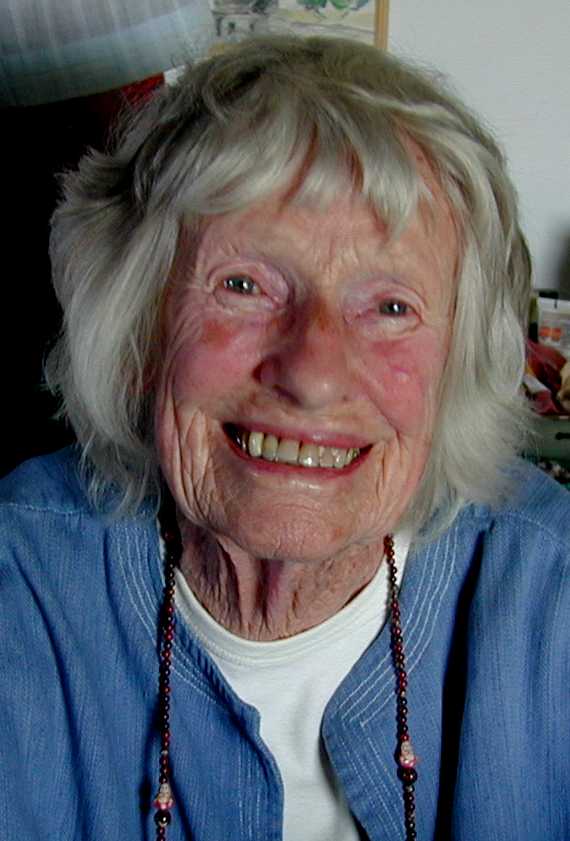
A Dear Friend is ‘Gone’

Jehane in Kolofana, Amorgos, Greece May 2006

Here is one of my favourite photos of my very dear friend, Jehane West, who died yesterday. The  pic was taken on a rare occasion when she would allow me to point my camera in her direction.

Jehane was such a remarkable being. She shared with so many her clear and emphatic perspective on any aspect of Life, with passion, humour and honesty – and she did so with the wisdom and beauty of her poetry, and her Presence.

Jehane was a great mentor and teacher to me; always recommending the path of lightness and fun, but insisting also that the journey be made with an unflinching commitment to Truth. I have no idea how many other lucky people fell under her influence in such a manner. I do know that it was one of the greatest of good fortunes in my life to do so.

Like so many other people, I will dearly miss talking with and sharing time with Jehane. In her inimitable poignancy and wit however, I am reminded of what she told me just  a few weeks ago ” I am really not going any distance away”, and “I will still be right here” beside you (each of us who knew her).

Here is to the eternal memory of my dear friend, Jehane – who hasn’t gone anywhere at all!   Yasas

Posted in Uncategorized | 1 Comment

Christchurch Earthquake – some personal repercussions

As some of you may know, my brother-in-law, Daryl Snell is from Christchurch, NZ, where the recent earthquake devastation has occurred. Daryl and my sister Alvina now live in Kamloops. All of Daryl’s family live in New Zealand, most of them still in Christchurch.

To listen to Daryl recounting how his family is managing to get through this in a CBC radio interview earlier today click on

Kamloops man from Christchurch, called Shock and Aftershockhttp://www.cbc.ca/daybreaksouth/

Thankfully, Daryl’s family members are physically unharmed, but the toll of such momentous events can be huge even so. Please join me in visualizing immense practical support and wise heart-full compassion for all the residents of Christchurch, and for their loved ones worldwide.

Thank you

Posted in Musings from Here and Now | Leave a comment

In Preparation for an Open House Event…

I mentioned in my New Year’s post that Rod Punnett and I are hosting an Open House event later this month, regarding our “Presence Project” work. Well this short post and another following one that I will post soon are meant as useful resource material, either in advance of that Open House event, if you are attending, or simply as more information because you are curious to know more.

The place to start is probably with a definition of the term “Presence”. Below is a quote defining the word from A.H. Almaas, a pseudonym under which the founder of the Diamond Approach, Hameed Ali, writes:

So there is a place for trying to be present. But in time, the more you become present, you see that there is tension; there is a me trying to do something and there is the Presence. You see that actually the Presence doesn’t want anything, doesn’t try anything. You start wondering: what’s this? How can I try to be present? Who is trying to be present? And that’s when you allow yourself to be influenced and affected by Presence. That’s when you learn to be vulnerable. (Diamond Heart Book 3, pg 209)

I will have to continue this later, since I am writing this from a library whilst on holiday, and I must leave now ….


Posted in Uncategorized | Leave a comment

New Year’s Day 2011

This blog entry has been in gestation for many days now – which in itself is relevant to the content. How is one to deal with procrastination and resistance to change?

I recently read another wonderful book which I highly recommend: The Anatomy of Change, by Richard Strozzi Heckler. Heckler is an Aikido instructor (sensei), and body-oriented psychotherapist and an educator, and his perspective on what is required to bring about change really resonates with me. Put most simply, Dr. Heckler’s work is chiefly directed at embodiment. I have pasted his short article, “A Return to Our Livingness” at the bottom of this post.

Those of you who have read some of my previous posts here will know that in the last year I have been through a relationship split, the witnessing of a serious assault, a burglary, a tax audit and ongoing challenges around my elderly mother’s care needs. I don’t think it particularly useful to simply name a catalogue of challenges (which in comparison with the circumstance of others’ lives can seem huge or miniscule) as if that list says anything poignant about me. My reason for noting the events of my recent past then, is to remind myself, and you fair reader, of the prime importance of staying embodied in the face of challenges – whatever they may be.

Like so many others around me, I am thinking this day of what I might do to change my habits for the better. Or, that was a portion of what floated through my awareness this morning as I lay in bed listening to the CBC. Fortunately, into that space came the poem read below by its talented, young writer:

Let’s Go Around Again

by Tanya Davis 2010

Last night, we sang auld lang syne

we kissed the ones that we stood beside

and at the stroke of midnight

we all agreed to put that year to bed

we wake up this morning with another fresh beginning hanging over our tired heads

Sooo… what next?

it is time for resolutions, I guess

ok then, starting this morning I will weigh less

beginning today I will lay my addictions to rest

I will overcome

I will not succumb

I will do my best

Words like these are surely being uttered all across the land

people with a concrete reason to forge ahead with a new plan

but there is a flaw in the origin, from the get-go a seed of discouragement

grows from I can to I can’t

Because, although the symbolism is here

all of us with our fresh calendars

our new page

permanence is difficult to motivate

and the ability to succeed crumbles underneath the pressure to change

and it’s not that we can’t change

it’s just that to set expectations so high while desiring such a rapid pace

is kind of unsustainable, it makes failing a fail safe

What if personal improvement was not a time-specific commitment

and instead of a fresh start we just kept living

if life was more a circle then a series of beginnings and endings

and we could still have goals but

perhaps we would just differently tend to things

without an external pressuring

or an internal festering if our resolutions hold on our motivation’s goals was lessening

… we would still grow, we could mend things

by no means

I am dismissing what the new year brings

the kisses or the revelling

the symbols or the reckoning

the reflecting on things

I like to celebrate with strangers on a concrete occasion

and have something sincere to say to them, especially

Happy new year

I’ll take a new page, too

but all I have to do with it is be here

not suddenly improve

2010 can pack it in and 2011 can begin and I’ll be the baton passed between them

carried along

c’mon everyone

let’s go around again

From: http://www.cbc.ca/day6/blog/2011/01/01/lets-go-around-again-by-tanya-davis/

So now, how is it I can balance between honestly acknowledging my own track record of (NOT) really changing past habits, with a newly developing and deepening commitment to supporting myself through the process of true, fundamental change? What will it take to make that change toward many following changes? In a word, embodiment.

Look again tomorrow for a post about an Open House my friend Rod and I will be offering in three weeks from today. The purpose behind that gathering will be to explore ways in which Presence can deepen, and we can remind ourselves of both the opportunity and the need to be more embodied…..

A Return to our Livingness


By Richard Strozzi-Heckler, Ph.D.

We are made to feel. Feeling is that part of us that is aware when danger is present, and when it is safe; who we can trust, or not; to empathize with others; to love; to be touched by beauty; to live in purpose and meaning; to be part of the natural order; and, to lead a moral life. Feeling brings us present to our livingness. Simply said: Feeling makes us fully human.

We are also made to language. Language allows us to think through complex issues; to place things in perspective; to order our world; to access memory and declare the future; to coordinate with others; and, to distinguish right action. Simply said: Thinking makes us fully human.

Feeling and Thinking are two currents of the river we call our livingness. Sensations, images, actions, moods, images, thoughts, streamings, contractions, expansions, and gestures make up the livingness we call ourselves. This is conversationally referred to as the mind/body connection and it points to the inextricable link between the body and the self. The recent advancements in neuroscience technology have scientifically demonstrated, (Read: verified by hard science therefore must be true) what has been known for millenniums by practitioners of consciousness. What and how we feel affects what and how we think; and what and how we think affects how we feel. When our feeling-self and thinking-self are coherent we are at our most powerful. When they’re at odds, we’re a train wreck.

Think of someone you love, how does that feel in your body? Think of something negative, how does that feel in your body? Hunch your shoulders, breathe shallow, squeeze your eyes and plan your day tomorrow, how does that feel?

When we do simple exercises like this the connection is very clear and simple, but over the last four hundred years we have slowly, but tenaciously weighted the importance of the thinking-self to the exclusion of the feeling-self. Furthermore, the explosion of technology in the last sixty years has dramatically increased this split. The majority of people spend their time in front of machines attempting to reason themselves through problems and relationships. Our social institutions, influenced by traditional religion and science, enforce and reify our thinking, rational self and we have come to rely on and live through dogma, ideology, symbols, concepts, and cognitive constructs. This perpetrates a disembodied view of the world in which we have lost access to a deeper intelligence and wisdom. This objectification, in other words, has minimized our ability for self-responsibility, self-healing, self-learning, and self-generating.

Languishing in this void of feeling, sensing, intuition, meaning, and purpose we have lost our ability to be self-knowing and world-knowing. This ultimately reduces our capacity for ethical, skillful action which is based in sustainability for the planet and dignity for all people. We have now reached a critical historical juncture in which it is necessary to take a stand in which we experience ourselves as a responsible part of the whole. In this post-Copernican view of the world we must now declare “I am responsible for my own experience. I am part of this Universe and it is my responsibility to take care of it.” (Though I use the personal “I” this is meant to represent the collective “We” as well).

We do not need a religious or scientific mediator between our experience and our experience of the world. Our needs and purpose can never be fulfilled through nation states or authoritarian institutions that represent an objective, non-feeling, disembodied power. We make the world; we are part of the world; and, it is our responsibility to keep it in good shape. This is a call for bold and courageous action.

In this moment of choice, our power to be self-generating, self-healing, and self-learning is at stake and with it the future of the planet and all living things. This path of transformation begins by turning our attention to the feeling self, turning our attention to the livingness we call our body.

Strozzi Institute 707-778-6505 | Terms of UsePrivacy Policy | © 2010 Strozzi Institute | All Rights Reserved.


As Mahatma Gandhi said, “You must Be the Change you want to see in the world”


Happy New Year,


Howard


Posted in Musings from Here and Now | Leave a comment